Connect with us

BUSINESS

Britain and France to co-chair the group steering Zimbabwe’s debt talks

A new Debt Consultative Group co-chaired by London and Paris is due to meet this month. The headline debt figure depends on which document you read.

Published

on

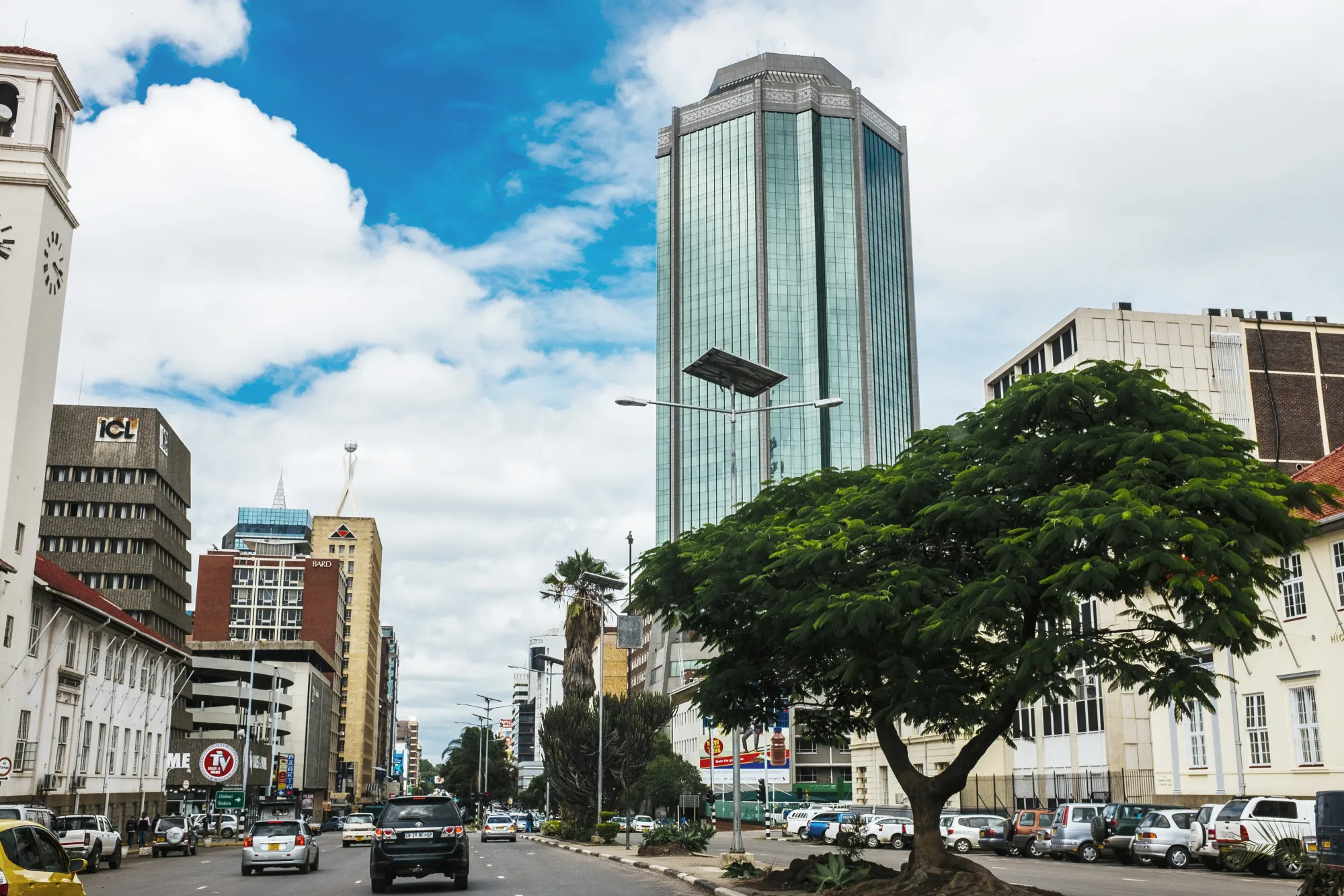
Reserve Bank of Zimbabwe

France and the United Kingdom have agreed to co-chair a new Debt Consultative Group that will steer talks between Zimbabwe and its creditors, in what the government presents as a significant endorsement of its arrears clearance plan.

Bloomberg reported on 4 August, citing a finance ministry document sent from Harare, that the group would hold its first meeting later this month. The Zimbabwe Mail reported separately that the body sits under Zimbabwe’s Structured Dialogue Platform and is intended to give bilateral and multilateral creditors a transparent and predictable forum for engagement, alongside the country’s 10-month IMF Staff-Monitored Programme.

The two accounts differ on the size of the problem. Bloomberg put Zimbabwe’s debt at about US$23 billion. The Mid-Term Budget Review, cited by The Zimbabwe Mail, records total public and publicly guaranteed debt of US$21.8 billion at the end of 2025, up from US$21.5 billion a year earlier.

On the budget review figures, external debt accounts for roughly US$11.8 billion and domestic debt for about US$10.1 billion. Around US$8.1 billion of the external portfolio — close to 70 percent of it — is accumulated arrears built up over more than two decades. Paris Club creditors are owed some US$4.2 billion and non-Paris Club lenders about US$2.3 billion, with further obligations to the World Bank, the African Development Bank, the Trade and Development Bank and Afreximbank.

Those arrears, rather than the headline total, are what keeps Zimbabwe locked out of cheap money. The country has been unable to borrow on international capital markets since it defaulted at the end of the 1990s, and multilateral lenders will not resume concessional lending while the unpaid balances stand. The immediate target of the current framework is roughly US$2.7 billion owed to a small group of international financial institutions.

Whether the new group changes anything depends on creditors accepting that Zimbabwe’s reform commitments will hold. The Structured Dialogue Platform has been running for several years without producing an arrears clearance agreement, and the arrears themselves have continued to accumulate throughout.

Sources: Bloomberg; The Zimbabwe Mail; NewsDay.

Continue Reading
Advertisement
Click to comment

Leave a Reply

Your email address will not be published. Required fields are marked *

BUSINESS

Lithium overtakes platinum as Zimbabwe’s mineral exports double to US$4.7 billion

Lithium sales reached about US$2.16 billion in the first nine months of 2026, pushing mineral export earnings above US$4.7 billion, the Minerals Marketing Corporation says.

Published

on

Zimbabwe’s lithium exports have overtaken platinum group metals (PGMs) as the country’s biggest mineral earner outside gold, according to figures from the Minerals Marketing Corporation of Zimbabwe (MMCZ).

MMCZ general manager Nomusa Moyo told a briefing on Wednesday that lithium sales reached about US$2.16 billion in the nine months to 30 September. ZimLive and Reuters, whose report was carried by Mining Weekly, both carried the figures. Total mineral sales, excluding gold, doubled to about US$4.74 billion from US$2.35 billion in the same period last year, ZimLive reported.

ZimLive said lithium made up 45.6 percent of mineral sales and exceeded PGMs by about US$430 million. PGMs earned about US$1.73 billion over the period.

Spodumene concentrate was the largest contributor at about US$1.8 billion. Petalite brought in about US$155 million and lithium sulphate, a processed product, about US$190 million. Reuters reported that spodumene prices rose 283 percent, which it identified as the main driver of the increase.

Moyo said the figures show that processing minerals locally is starting to translate into export earnings, ZimLive reported. China’s Zhejiang Huayou Cobalt began exporting lithium sulphate from its Zimbabwe mine in April after building what Reuters described as Africa’s first lithium salt plant, and about 33,000 tonnes had been exported by the end of September, according to the MMCZ.

Reuters added that most of Zimbabwe’s lithium goes to China, and that Chinese firms dominate mining and processing after investing about US$2 billion since 2021.

Sources: ZimLive, Reuters via Mining Weekly.

Continue Reading

BUSINESS

IMF approves second review of Zimbabwe’s Staff-Monitored Programme as inflation stays in low single digits

The IMF says Zimbabwe’s economy remains resilient, with ZiG inflation at 3.7 percent in September, but flags a shortfall in protected social spending.

Published

on

The International Monetary Fund has approved the completion of the second review of Zimbabwe’s 10-month Staff-Monitored Programme (SMP), the Herald reported on 8 October, citing an IMF statement issued on Wednesday.

The IMF said the economy remained resilient, with activity expanding in the first half of 2026 and annual ZiG inflation at 3.7 percent in September. It said the exchange rate was broadly stable and that the external position benefited from strong mineral exports, favourable commodity prices and resilient remittance inflows. Fiscal revenue also exceeded expectations.

The approval follows a staff-level agreement announced on 17 September after an IMF mission led by Wojciech Maliszewski visited Harare. At that stage the IMF said the agreement was subject to approval by IMF management, which has now been given.

The Fund said programme implementation through end-June was strong. All quantitative targets and structural benchmarks were met, as were all indicative targets except one: the floor on protected social and priority spending. The IMF attributed that shortfall to persistent implementation bottlenecks and called it a significant concern.

The IMF projects growth of 5 percent in 2026, slowing to 3.5 percent in 2027 because of the expected effects of an El Niño-related drought on agriculture. It said risks are tilted to the downside, particularly if the drought is more severe or commodity and energy prices rise.

The Herald said the review is expected to strengthen Zimbabwe’s track record as it works to clear external arrears and re-engage with the international financial community. The IMF described the programme as supporting that agenda and said the 2027 Budget should be anchored in prudent revenue and financing assumptions.

Sources: IMF statements of 17 September and 8 October 2026, The Herald.

Continue Reading

BUSINESS

NRZ returns 100 wagons to service as Mutapa chases US$115m rail loan

Zimbabwe’s railway has recommissioned 100 refurbished wagons and three locomotives under a US$2.8 million partnership with Zimasco, while a far larger Afreximbank facility is negotiated.

Published

on

The National Railways of Zimbabwe has brought 100 refurbished high-sided wagons and three locomotives back into service under a US$2.8 million partnership with ferrochrome producer Zimasco, as the state operator pursues a far larger financing package to rebuild its fleet.

The rolling stock was commissioned in Harare on Thursday by Transport and Infrastructural Development Minister Felix Mhona, who described the arrangement as a model for reviving idle railway assets without an immediate call on the treasury.

“This partnership exemplifies a win-win financial engineering model. By funding the overhaul of idle wagons in exchange for freight charge offsets, Zimasco has secured a reliable supply chain route to international markets,” Mhona said.

Under the deal, Zimasco financed the refurbishment of idle stock in return for freight charge offsets and dedicated capacity to move chrome and ferrochrome towards the regional ports of Beira and Maputo.

Mhona said a functioning railway was essential to Zimbabwe’s stated goal of reaching upper-middle-income status by 2030, describing rail as the cheapest and safest way to move bulk cargo. He argued the investment would ease logistics bottlenecks and spare rehabilitated roads the damage caused by heavy trucks.

The commissioning forms part of a wider recapitalisation effort led by the Mutapa Investment Fund, the sovereign wealth fund to which NRZ was transferred.

Fund chief executive John Mangudya said the strategy was aimed at restoring the railway’s commercial viability. Among the planned interventions is a US$115 million facility being negotiated with the African Export-Import Bank, which would fund 10 new locomotives, 315 wagons and the rehabilitation of key infrastructure.

Government is also pursuing track and signalling upgrades and a resource-backed arrangement with China Railway International Group.

Mhona said US$10 million had been secured for the Chicualacuala–Plumtree and Machipanda–Harare lines through tripartite cooperation with Mozambique and Botswana, and that cooperation with South Africa on the North-South Corridor had been revived.

NRZ has been hollowed out by years of under-investment, and freight volumes remain a fraction of what the network carried at its peak in the 1990s. Mhona urged other mining companies, farmers and fuel importers to take up similar partnerships.

Sources: NewZimbabwe.com, 263Chat, Sowetan, MINING.COM, Business Day.

Continue Reading

Trending